
John RIDOUT and Elizabeth PORTER married in 1687. Amongst others, they had sons John (b. 1692) and Porter (b. 1699/1700). Porter married a woman called Abigail whose surname, I believe, was HIBDITCH. A female of this name was baptised in Sherborne, daughter of James and Jane, on the 21st February 1698/9 and the reasons that I believe this to be Porter’s wife are threefold. Firstly, the couple had several children (John bp. 28th Jul 1731; Porter bp. 25th; April, 1733, James bp. 10th Sep 1735, Mary bp. 4th Jan 1738/9, Thomas bp. 11th Aug 1744 and Anne bp. 14th Jan 1747/8) and Roger Hibditch bp. 30th July 1740 – Roger was the only child to be given a second name and it was not uncommon practice for this to reflect the mother’s maiden name. Secondly, in the will of Bernard Hibditch (1734) the testator says that he is father-in-law of Richard Porter, a relative of John’s wife Elizabeth. Thirdly, Porter Ridout Jr mentioned his ‘kinswoman Ann Hibditch’ in his will and she is known to have lived with him as his servant at a later time.
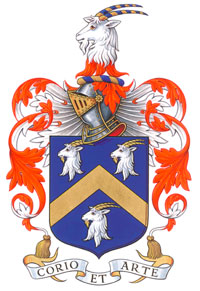 Porter and Abigail’s son Porter left Sherborne at some point and went to London. He purchased a Freedom of the City of London on Thursday 5th June 1760, paying 46 shillings and 8 pence, which helped to ‘discharge the debt of the City.’ Porter Jr joined the Livery Company of Cordwainers where he was said to be ‘son of Porter of Sherborne, farmer.’ On the 19th April 1761, he married Elizabeth HUGHES, a widow from Duke’s Place, Aldgate; Porter was from St Katharine Cree, a parish nearby. The couple married at St James’s Church in the bride’s parish and the next year Elizabeth had a son Jeremiah who was baptised at Duke’s Place on the 11th June 1762. Perhaps as a consequence of the birth, Elizabeth died a few weeks later; there is an administration of her estate to Porter dated 28th September 1762. Having found a will for Elizabeth’s first husband Thomas Hughes (prob. 1759), a distiller and ‘coffeeman’ of Duke’s Place, it seems probable that this is how Porter came to Aldgate, took over ‘Tom’s Coffee House’ and stayed there for the next two decades.
Porter married a second time to Elizabeth MORRIS, a young spinster from Barking in Essex. An allegation was made and signed at St James’s on the 26th November 1764 and the couple married a year later, on the 17th November 1765 at St James’s, Duke’s Place. I have found no children of this marriage.
From 1763 to 1784, Porter is shown in Land Tax records for London, paying variable amounts in tax for his property at Duke’s Place, usually about £2 12s 0d. An entry for 1784 gave his address more specifically as ‘Broad Court’. Comparing tax entries across these years, it seems that Porter had stayed at this same address throughout his time in the area. Perhaps his life was for the most part straightforward and untroubled but one night things were to change very drastically.
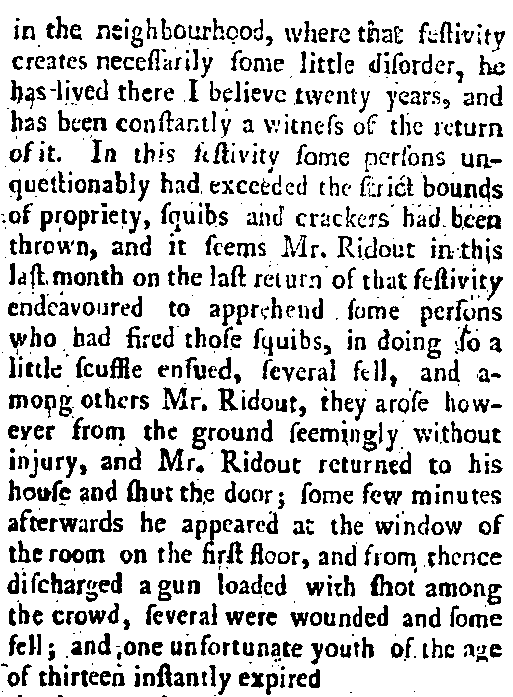 On the 20th October, 1784, Porter Ridout was indicted “that he, not having the fear of God before his eyes, but being moved and seduced by the instigation of the Devil, on the 7th of October, in the 24th year of his Majesty’s reign with force and arms, at London, in the parish of St. James’s, Duke’s-place, upon Moses Lazarus, in the peace of God and our Lord the King then and there being, did make an assault, and with a certain gun, value 1 shilling, then and there loaded with gun-powder and leaden shot, which he held in both his hands, to, at and against the said Moses, feloniously, wilfully, and of his malice aforethought, did shoot and discharge, and him the said Moses in and upon the right breast, and in and upon the right side of the body, near the upper part of the belly, did then and there feloniously, wilfully, and of his malice aforethought, strike and wound giving to him the said Moses in and upon the said right side of the breast, one mortal wound of the depth of four inches and of the width of one half quarter of an inch, and in and upon the right side of the body near the upper part of the belly, another mortal wound of the depth of three inches and of the width of one half quarter of an inch, of which he instantly died: and the Jurors say that the said Porter Ridout, him the said Moses Lazarus did kill and murder. He was likewise charged on the coroner’s inquisition with the like murder.”

Great Tabernacle, Duke’s Place
Porter’s coffee house was in the Jewish quarter; the Synagogue was not far away. On this day in October, the locals were celebrating the Simchat Torah, marking the conclusion of the Feast of the Tabernacles; the men and boys were always rather rowdy during this festival and Duke’s Place was very crowded. Apparently, Porter had attempted to remonstrate with some men who were throwing squibs and fire crackers at his house. In so doing he was set upon by the crowd, had his pocket picked and sustained several minor injuries. Managing to break away, he fled to his house hotly pursued by the angry mob. He and his servant, Ann Hibditch, managed between them to close the door against the rioters and Porter was seen moments later, standing at an open upstairs window holding a gun which he fired randomly into the crowd below. The shot comprised some small lead pellets normally used to scour the insides of glass bottles but, unfortunately, they penetrated the flesh of a thirteen year old boy who subsequently died.
Defended by Mr William GARROW, a very eminent barrister of the day and, after many character witnesses had spoken in his favour, Porter was found innocent of wilful murder and set free. The full transcript of the case can be seen at the ‘Old Bailey Proceedings’ online. Anti-Semitism was never suggested as a motive for this killing; on the contrary, Porter seemed to have many friends in the neighbourhood, some of whom gave evidence of his good character. He had also worked as a Peace Officer in the community and had learnt to speak Hebrew.
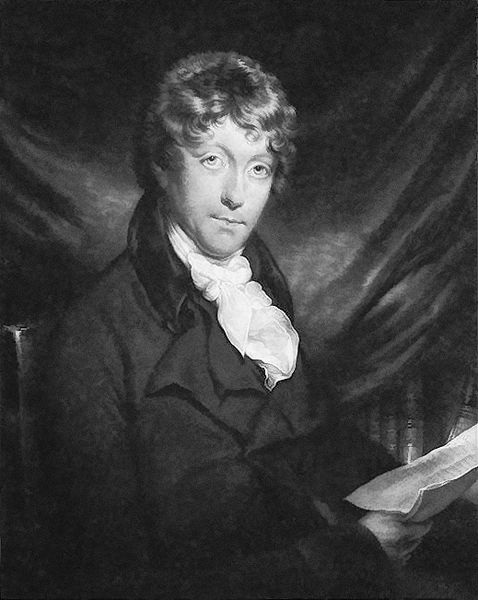
William Garrow
However, the last tax record for Porter in Duke’s Place in 1784 indicates that, not surprisingly, he could no longer stay in the area and so moved away. He died and was buried at Bunhill Fields, a non-conformist cemetery in London on the 4th April 1793. His will, dated 2nd March 1793 and proved the 8th April, shows that, now a self styled ‘gentleman’, Porter had been living in the quiet suburb of Camberwell in Surrey. He bequeathed £2,000 to Ann Hibditch, his kinswoman along with many household goods. He also gave money to his married sister Ann (surname illegible) and left the residue of his estate to ‘my loving son Jeremiah’.
Jeremiah Ridout, born in ~1762 at Duke’s Place was still a young man when his father died. On the 25th September 1788, he married Martha MEDLEY at St Andrew’s by the Wardrobe, her parish, whilst his was said to be ‘St Magdalen & St Gregory’. Clearly he had not stayed at Duke’s Place either. A description states: ‘…the church of St Mary Magdalene Old Fish Street with St Gregory by St Paul is situated on the north side of Knightrider Street at the west corner of the Old Change’ (very close to St Paul’s Cathedral). Jeremiah was listed in the London Poll Book 1796, under the Liverymen, in the Company of Cordwainers, as ‘Jeremiah Ridout, cordwainer of Little Knight Rider Street.’ I have not found any children of this marriage and presumably Martha died as, on the 22nd December 1794, Jeremiah married a second time to Sarah SMITH. The wedding took place at the bride’s parish in Stoke Newington; she was a spinster and he was ‘a widower of St Mary Magdalen, Fish Street’.

J G Ridout attends the birth
Jeremiah and Sarah had two daughters, Sarah, bp. 26th Jul 1800 at St Clement Dane’s Church, Westminster and Mary bp. 22nd May 1802 at St Stephen’s Exeter. Clearly, the family moved around quite a bit! Both of these baptisms were recorded retrospectively at Dr. William’s Library of Nonconformist Registers. Helpfully, a record of the bride’s birth in 1762 added her parent’s names as Reuben and Sarah Smith. Reuben was a soap boiler and shopkeeper from Bilderstone, Hadleigh in Suffolk; his family were ‘Independents.’
Jeremiah moved to Birmingham at some point; an examination of British Newspapers showed the sale of many properties belonging to him in the Hagley-Row (probably now Hagley Road) area of Edgbaston, also the marriage of Jeremiah’s daughters and then the death of his wife Sarah in 1830 (Coventry Herald, 24th Dec) aged sixty-four years; all in the same area. Finally, Jeremiah’s death appeared (Coventry Herald, 25th Feb 1842), the entry reading: “In his 81st year, Jeremiah Ridout Esq. of Edgbaston who for many years carried on a business as an American merchant.” And hence this line, having no male Ridout descendants, could not be traced by yDNA testing, but both daughters made good marriages, of which much is written. Sarah married William WILLS and Mary married Henry William Gardner WREFORD (see Wikipedia).

From ‘Memorials of the Old Meeting House and Burial Ground’ ed. Catherine Hutton Beale 1882.
It is not clear just what goods Jeremiah may have sold. A fire insurance policy for the Sun Company, dated 31st July 1811 was taken out for ‘Messrs Ridout and co, Knight Rider Street, merchant’ and looking again at insurance records, I found that the earliest one was dated 1785 for Porter Ridout’s premises at No. 9 Knight Rider Street. So, the business had been running for nearly thirty years but I can find no references or advertisements of relevance.
One interesting thing about this investigation so far is that ‘present at the birth’ of Sarah Ridout in Norfolk Street in 1800 was a ‘J G Ridout’. The only Ridout man that I know from my records with these initials was Dr John Gibbs Ridout (1575-1823) who lived near Blackfriars Bridge, quite close to Knight Rider Street; he was the son of George Ridout (1701-1779) and grandson of Christopher (1669-1743). Does this imply that the Nethercombe Ridouts belong to this part of the Sherborne tree? Not necessarily; Dr Ridout was trained in midwifery and may well have attended the birth quite by coincidence.
Even after leaving London for Birmingham, Jeremiah retained his right to vote in the City of London; the 1838 Poll Book for the Parish of St Lawrence Cheapside and others show that he qualified by having a freehold property at 27 King Street, a thoroughfare that runs from Cheapside to the church of St Lawrence Jewry.
Knowing that Jeremiah Ridout had died in 1842, I looked for his will, which I found, dated 3rd March 1841. It ran for several pages and mentioned his daughters, their husbands and children. There were no helpful references to other Ridouts but Jeremiah did mention his freehold properties in Knight Rider Street, Duke’s Place and Edgbaston. I noticed that there was another will listed under ‘Jeremiah Ridout’ dated 14th July 1786 and so, out of curiosity, I read it. The contents were very interesting but rather confusing!
 “I Jeremiah Ridout, Citizen and Cordwainer of London do make my last Will and Testament in manner following Videlecit I desire my Body may be interred at the discretion of my Executor herein after named in my family vault in Bunhill ffields Burial Ground and as touching other Worldly Estate wherewith it has pleased God to bless me I dispose of the same as follows and first I give and devise all and every my ffreehold Messuages Tenements and Hereditaments situate in King Street Poor Jewry Lane and Duke’s Place London and all other my real Estates whatsoever and wheresoever unto Edward Jefferies of Lothbury London Blackwell hall factor and his heirs To the use Use Intent and purpose that Mary How my servant in case she shall be living at the time of my decease…..”
The annuity was to be paid from the rents of his various properties and, after a number of other bequests to Grace, widow of cousin Thomas CRAY (deceased), Edward JEFFERIES, Stephen LOWDELL, William PATFUL and his wife Rebecca, cousin Ann Cray, Elizabeth SOUTHWARD, daughter of cousin Richard Cray (deceased) and sons of Robert PLIMPTON (deceased) his brother-in-law, the remainder of his properties were to be given….
“….. to the use of my Cousin Porter Ridout of Knight Rider Street London Gentleman and his assigns during the term of his natural life. He the said Porter Ridout and his assigns keeping the said ffreehold premises during such time in Tenantable repair and from and immediately after his decease subject and chargeable as aforesaid To the use of Jeremiah Ridout son of the said Porter Ridout his Heirs and assigns for ever….“
Porter received a great many personal items from his ‘cousin’ too, for example a gold watch, walking cane, tobacco pouch, framed prints of King William and Queen Mary, Bible, a tea service and others; these were to be passed on to his son Jeremiah after his death.
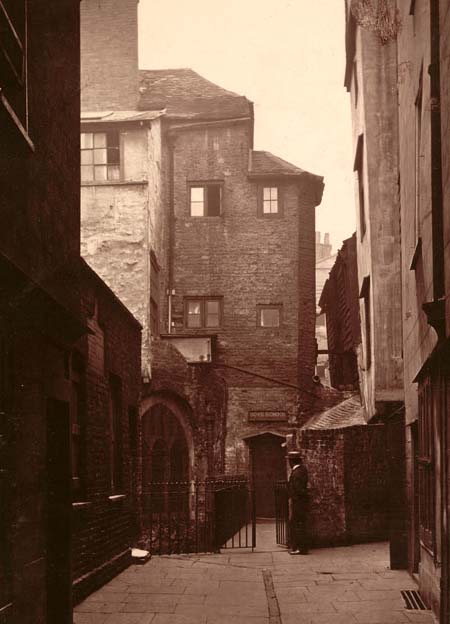
Cloth Fair
So, who was Jeremiah Ridout that died in 1787? He was buried ‘in the family vault’ at Bunhill Fields’, as was Porter. Jeremiah had called him ‘cousin’. If this was to be taken literally then it would imply that Jeremiah’s father was a nephew of Porter’s father, John Ridout. I set out to find this man in the available online records but, unfortunately, without knowing his age at death, this was not easy. Since Robert Plimpton was said to be Jeremiah’s brother-in-law, I was not surprised to find the marriage of Jeremiah to Mary Plimpton, a spinster and daughter of Robert and Mary. The ceremony took place at All Hallow’s Church in Tottenham on the 19th May 1737. The groom was from the parish of St Bartholomew the Great (West Smithfield) and the bride was from Christchurch (Middlesex). There was also an entry in the 1750 Poll Book for London which listed members of the Liveried Companies and under ‘Cordwainers’ was ‘Jeremiah Ridout, woollen draper, Cloth-fair.’ Jeremiah had mentioned this messuage later in his will which confirms that he is the right man.
I found the granting of the Freedom to the City to Jeremiah on the 30th August 1733 through patrimony (his father, named as Thomas Ridout, cordwainer, had apparently been granted Freedom on the 6th March 1694/5). In order for a son to achieve Freedom by this route, the boy had to be born after the father had become a Citizen. Since Freedom could not be granted until a man was twenty-one, Jeremiah must have been born between 1695 and 1712. He had served an apprenticeship with William Johnson, a draper of St Bartholomew’s, the duty for which was paid by Mr Johnson in 1720. Although most apprenticeships began when a boy was about fourteen, this tax could be paid at any point during the apprenticeship, or even afterwards, and so this does not help in the estimation of Jeremiah’s birth year.
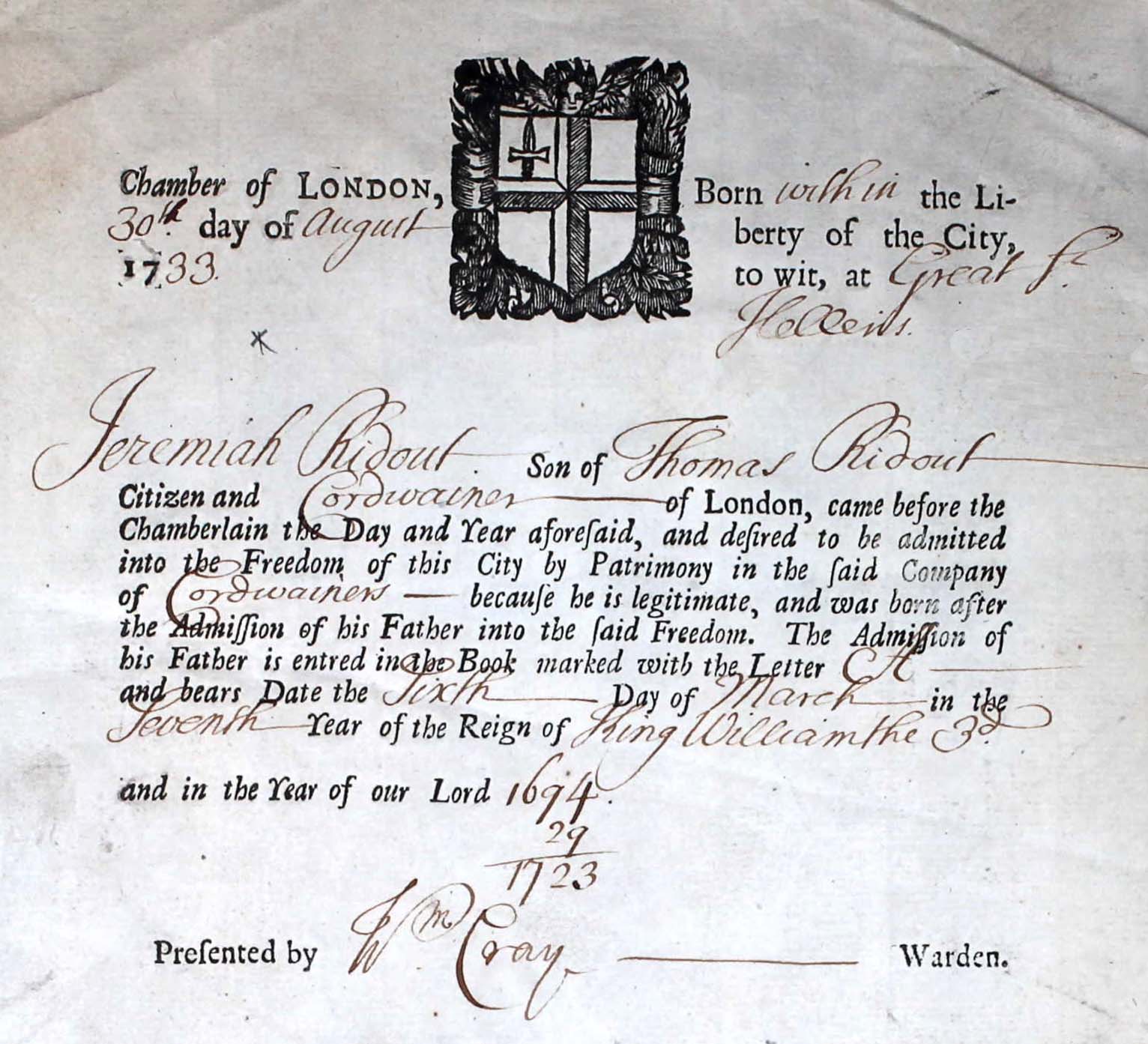
Freedom of the City of London
Jeremiah Ridout appeared in numerous Land Tax, Directory and Poll Books, invariably as a woollen draper of 22 Cloth Fair, an aptly named street where in medieval times, merchants would trade cloth during the fair of St Bartholomew’s. Great St Bart’s Church is close by and the whole area is in the London Borough of Farringdon Within, not far from Smithfield market. The Land Tax entries for Jeremiah run from 1734 to 1786, the year that he died; he didn’t appear to have left the area throughout his life. He left a will and he was buried in Bunhill Fields: ‘Mr Jeremiah Ridout, Cloth Faire, buried 5th December 1786; in a vault, cost 14s 0d’ (ref: RG4/3986/127).
Jeremiah’s father, as stated, was Thomas Ridout, a cordwainer. I found his will, dated the 26th October 1732 (probate 8th June 1734) which, after the customary salutation, continues …
“In the Name of God Amen. I Thomas Ridout Citizen and Cordwainer … whereas I have in my life advanced and paid unto my loving son Jeremiah Ridout the sum of one thousand pounds of lawfull money of Great Britain in setting him up in the Trade and business of a Woollen Draper which he now useth, therefore I do by this my will bequeath unto my said son Jeremiah Ridout only the sum of ffive pounds of like money for Mourning. I give and bequeath unto my son Thomas Ridout and unto my daughter Ann ffox the wife of james ffox and my son John Ridout and to each of them ffive pounds apiece of like money for Mourning. Item I give and bequeath unto Jeremiah Cray of Bishop Stoffod in the county of Hertford Upholsterer twenty pounds of like money. I give and bequeath unto my son in law William Cray Citizen and Cordwainer the like sum of twenty pounds of like money. All the rest residue and remainder of my money stock in Trade goods chattels and personall Estate whatsoever and wheresoever (my debts and Legacies herein before given being first paid and satisfied) I will shall be divided into three equal parts or shares and third part whereof I give and bequeath unto my loving son the said Thomas Ridout and other Third part or share I give and bequeath unto my daughter the said Ann now wife of James ffox to be paid her within twelve months next after my decease by my executor herein after named and the other remaining third part or share thereof I give and bequeath unto my said loving son John Ridout to be paid him by my executor herein after named att his age of twenty and one years.”
Thomas listed various freehold properties he had in London: including King Street, St Lawrence Lane, the Crown Coffee House, Poor Jury Lane and Dukes Place which he gives to Thomas with provisos to share the rental proceeds with his siblings such that they were treated equally. The London Magazine (vol 3 p. 328 1734) reported his death on the 3rd June as: ‘Mr Thomas Ridout, shoe-maker, near Aldgate, reputed to be worth 10,000L [£].’ Thomas also mentioned in his will Mr William Cray, Citizen and Cordwainer and Mr Thomas Cray, Citizen and Apothecary, sons-in-law.
So, Thomas Ridout appears to have at least four children alive at the time he made his will in 1732: Jeremiah, Thomas, Anne and John, but he made no mention of a wife and therefore it is probable that she had pre-deceased him. Thomas (a bachelor) had married Mary CRAY (a spinster) on the 14th April 1695 at St James’s, Duke’s Place; she was the daughter of Richard Cray. I found Thomas’s burial in Bunhill Fields: ‘Mr Ridout, Allgate, buried 6th June 1734; in a single grave, cost 13s 6d’ (ref: RG4/3978/102).
Since Thomas had been granted his Freedom of the City on the 6th March 1694/5 and the minimum age at this could be attained was twenty-one, he could not have been born later than 1674. Having been unable to find baptisms for Thomas and Mary’s children it was only possible to work, using a bit of logic, to calculate a rough idea of likely birth years.
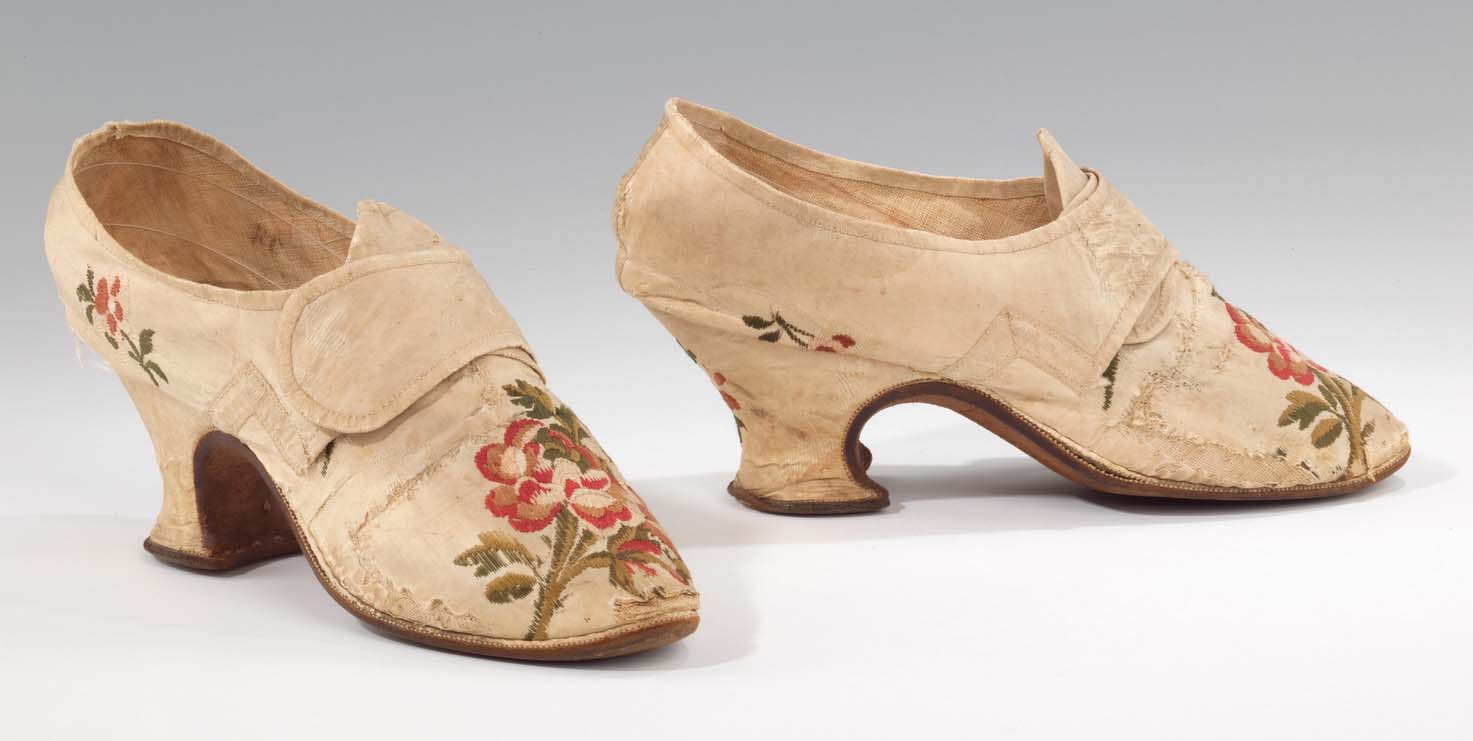
Shoes by Thomas Ridout now in the US Met. Museum
A document, dated 1728 showed that Thomas Ridout, son of Thomas Ridout, cordwainer, had qualified for Freedom by virtue of having signed on as an apprentice with his father for a term of seven years from the 7th May 1712. If Thomas had been fourteen when he began his apprenticeship, and had to be at least twenty-one in 1728, he must have been born between 1698 and 1706. Thomas was listed as a shoemaker in Shoemaker Row in 1750 as was another shoemaker, James DAVIS. Together the men had a very successful business and I was surprised to see photographs of some of their fancy ladies shoes on the Internet; amazing to think that some pairs have survived nearly three centuries! Interestingly, Shoemaker Row was renamed Duke Street and later, Duke’s Place, the same street on which Porter Ridout lived a few years later. Thomas died in 1768 and left a will; I also found his burial in Bunhill Fields: ‘Mr Thomas Ridout from Shoreditch, buried 10th October 1768; in a vault, cost 14s 0d’ (ref: RG4/4633/91)
Thomas’s son John was under the age of twenty-one when Thomas made his will in 1732, therefore he could not have been born earlier than 1711. John died in 1741, a young man; he left a will and was buried in Bunhill Fields: ‘Mr Ridout from Bishopsgate buried on 30th November 1741; in a vault, cost 14s 0d’ (ref: RG4/3980/22).
In contrast, by 1732 Thomas and Mary’s daughter Anne was married, to James Fox; their wedding was on the 19th August 1728 at St Saviour’s Church in Denmark Park, Southwark. Unfortunately, the parish records gave no details other than names and so this reveals nothing of the bride’s age but, supposing at the youngest she was eighteen, Anne would have been born in ~1710 or before. As there was more than one entry for Anne or James Fox amongst the non-conformist burials at Bunhill, I cannot identify the years of either of their deaths.
How this family and that of John Ridout and Elizabeth are connected was not clear at first. Thomas Ridout (d. 1734) made no mention of Porter Ridout in his will but his son, Jeremiah called Porter ‘cousin’ and mentioned Porter’s son Jeremiah as well. Looking at all the ages and dates, it would be virtually impossible for Thomas’s son Jeremiah and Porter Ridout to actually be first cousins, but it was common practice in the 17th and 18th centuries for ‘cousin’ to sometimes mean ‘nephew’ or ‘niece’, according to many genealogical references. Given the level of property, both real and personal, that Jeremiah gave to Porter and his son, one might infer that the relationship was fairly close. Oddly, just as I was reaching the end of this piece of research, I unexpectedly came across a page in Boyd’s ‘Inhabitants of London and Boyd’s Family Units’ found on an online genealogical pay site. The image is reproduced below (click to enlarge):

This record, made by Percival Boyd (1866-1955), a prodigious indexer, suggests that Thomas Ridout, the father of Jeremiah (‘Jeremy’), Thomas and John by Mary Cray had first married Susan PRITCHARD on the 7th September 1686 in St James’s Duke’s Place. I had seen this marriage in the parish register previously and wondered briefly whether this was the same Thomas but I dismissed the idea because in the Cray marriage Thomas was recorded as a bachelor. Now, I think what is more likely is that Thomas did marry Susanna in 1686 and fathered three female children Sarah, Edith and Elizabeth, all baptised in St Clement’s Church, Eastcheap. Perhaps they and their mother died and Thomas started a new life nine years later when he married Mary. His marital status could have been a genuine oversight by the recording clerk, a lie on Thomas’s behalf, or maybe even bigamy if Susan had not died! If Thomas had married as a young man, say about 20 years of age then, rather conveniently, this could easily be Thomas Ridout, baptised on the 22nd January 1665/66, son of John and Alice, brother to John Ridout (husband of Elizabeth Porter) which would mean that Thomas’s son Jeremiah was a first cousin once removed of Porter Jr.
STOP PRESS ….. 10th May 2013.
Yesterday I had a bit of a breakthrough. As I wrote in the previous paragraph, I had the feeling that Thomas Ridout the cordwainer, father of Jeremiah, was a son of John Ridout and his wife Alice but I had no proof. I wondered how Thomas had gained his own Freedom of the City of London in 1694/5 but I could find no entry for him in the index to the Freedom Admission papers, and so I methodically looked at each record in turn. After a few hours, I was rewarded by seeing a copy of Thomas’s’ apprenticeship indenture; he started a seven year term with his master, Joseph PARSONS, Citizen and Cordwainer, on the 23rd November 1682. Better still was how Thomas was described: “the Sonne of John Ridout, late of Sherbourne in the County of Dorsett, husbandman, deceased.” So this man was indeed who I had thought he was!

A sweet moment but… if Thomas had started an apprenticeship in 1682 at the usual age of about 14, his birth year would be ~1668 and he would have been just 19 on his marriage to Susanna in 1686. If Thomas had gained his Freedom when he was first able to, at 21, this would have happened in 1689 (not 1695). So, it seems that Thomas waited for six years until applying for his Freedom after finishing his apprenticeship. Why? A possibility is that, as Thomas and Susanna’s first child was born on the 30th October, less than two months after their wedding, the marriage had taken place, during Thomas’ apprenticeship, in order to legitimise their daughter. Thomas may have finished his indentures but worked at more casual labour to earn money and keep his family before finally applying for his Freedom, allowing him to develop his shoemaking business, after Susanna had died; perhaps he had received some financial assistance from his new in-laws, the Cray family.
This and the previous blog are summarised in the form of a family tree on the ‘Family Trees’ tab above.




 The Ridouts of Sherborne and Bath